
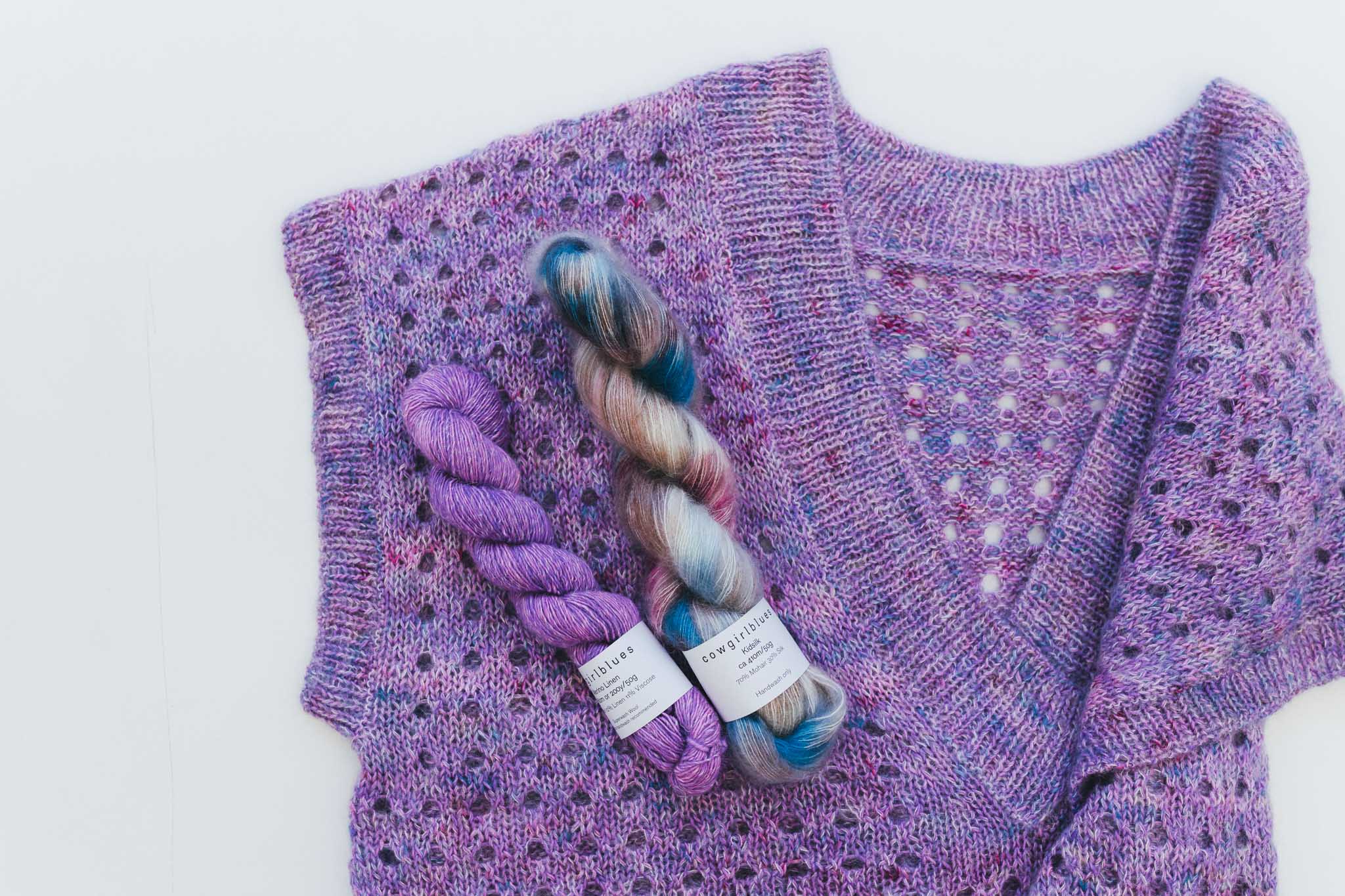
Do you have a beautiful skein of variegated yarn sitting in your stash that you’ve never quite known what to do with?
You’re not alone. Multis can feel intimidating. With all that colour and possibility, it’s easy to admire a variegated skein and then leave it untouched, waiting for the “right” project to come along.
This is especially true when we have multicolour yarns that were an impulse purchase. A combination of colours might really speak to you. Perhaps you’re travelling and buy a souvenir. But when you get it home you don’t know what to do with it. If a multicolour feels too intense marling it with a softer solid is a great way to turn down the volume.
What if you thought about it a little differently?
Our last two blogs have talked about marling, a technique where you hold two different colour yarns together. We’ve explained how to get started and showed how yarn dominance works in marling.
In both of these we’ve focused on pairing our solid colours together.
What happens when you marl a multi?
Variegated yarns pair really well with solids, especially when you’re marling. It’s a lovely technique that can work in two different ways.
Sometimes you might want to soften the intensity of a variegated yarn. Or you may have a solid colour that needs more depth or movement.
Multicolour Kidsilk with a Solid Merino
Adding a Multicolour Kidsilk to a Solid base yarn (e.g. Merino Linen/Twist/Lace or even DK) adds an extra dimension and subtle variation to your project.
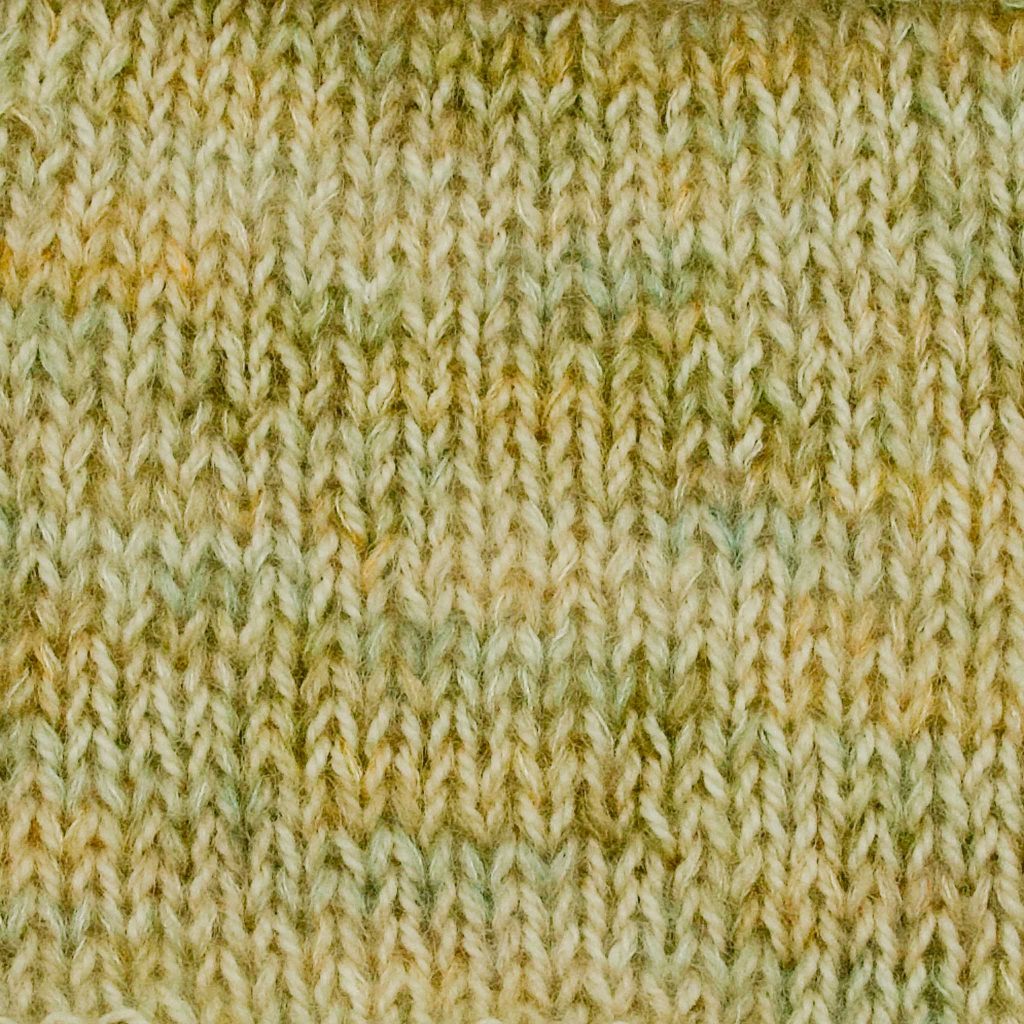
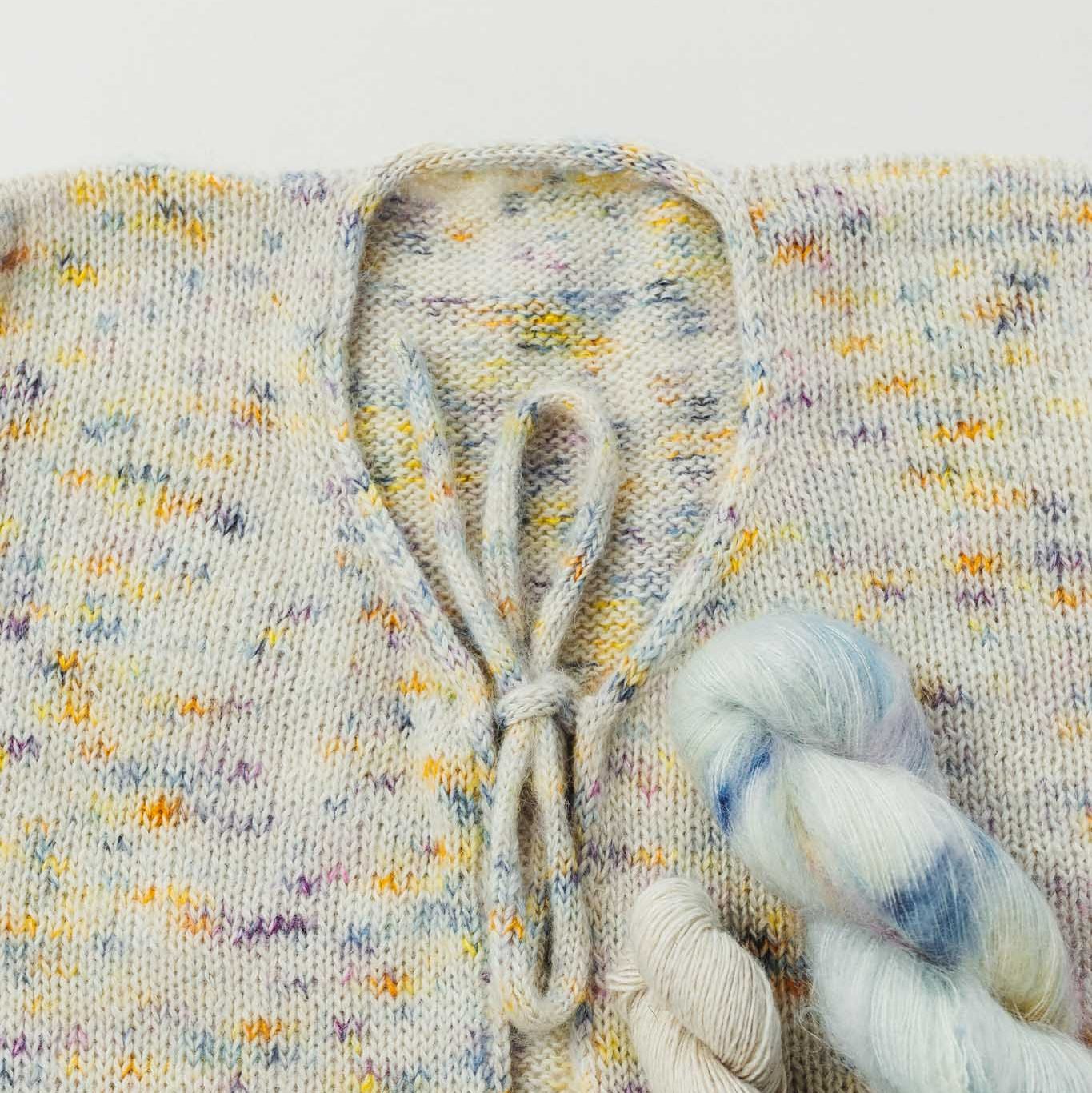
This project started with Champagne in Merino Twist, a soft neutral. We thought it needed a little something extra, and gave our sample knitter two strands of I’m Like a Bird in Kidsilk to hold with the Champagne.
I’m Like a Bird is one of our new multis – it’s background colour is Champagne, but it has touches of Low Tide, Saffron, and Sable. The two yarns are similar enough that the multicolour isn’t overpowering. It just adds a soft wash of colour variation to the neutral Champagne base.
Here’s how the two yarns look knit up into the Edgar Slipover by Kolibri by Johanna.
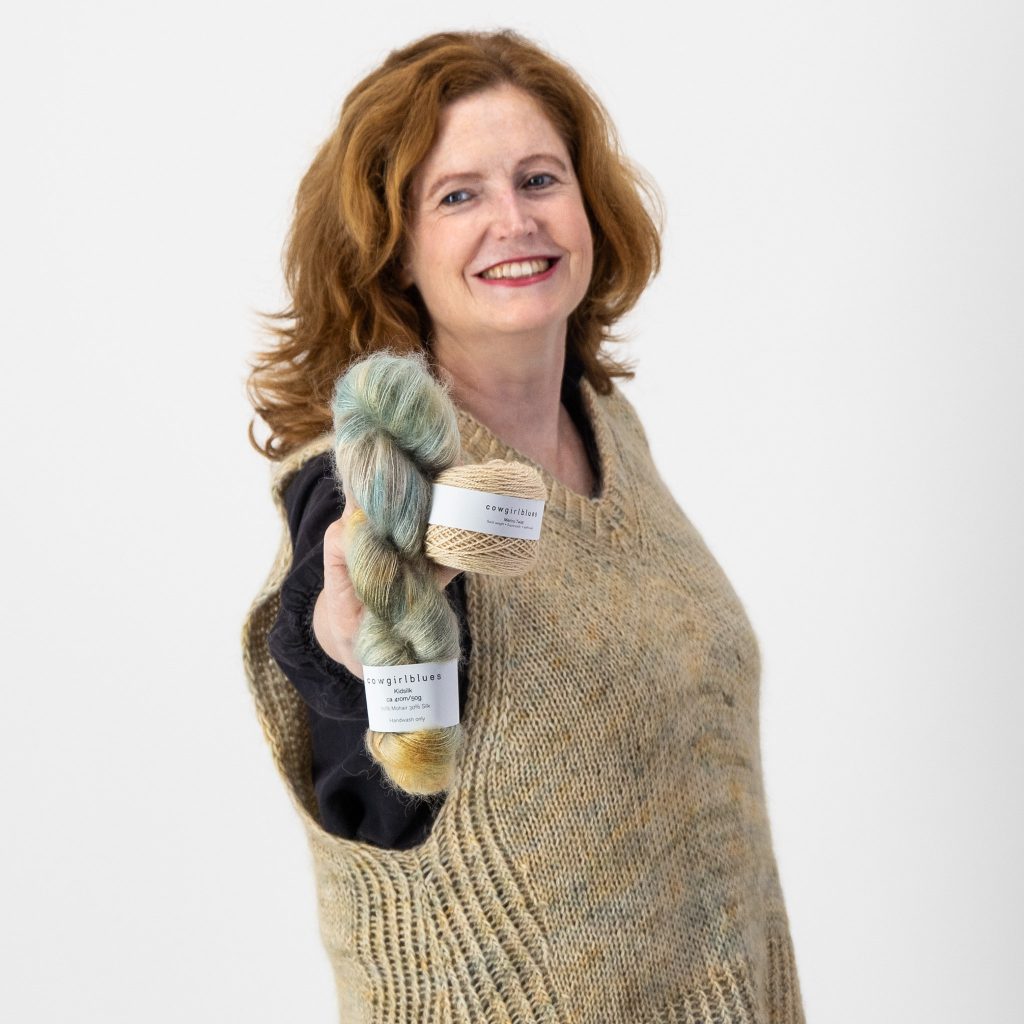
Strong contrasts can work too.
Here’s what marling can look like if the two yarns you choose are very different colours.
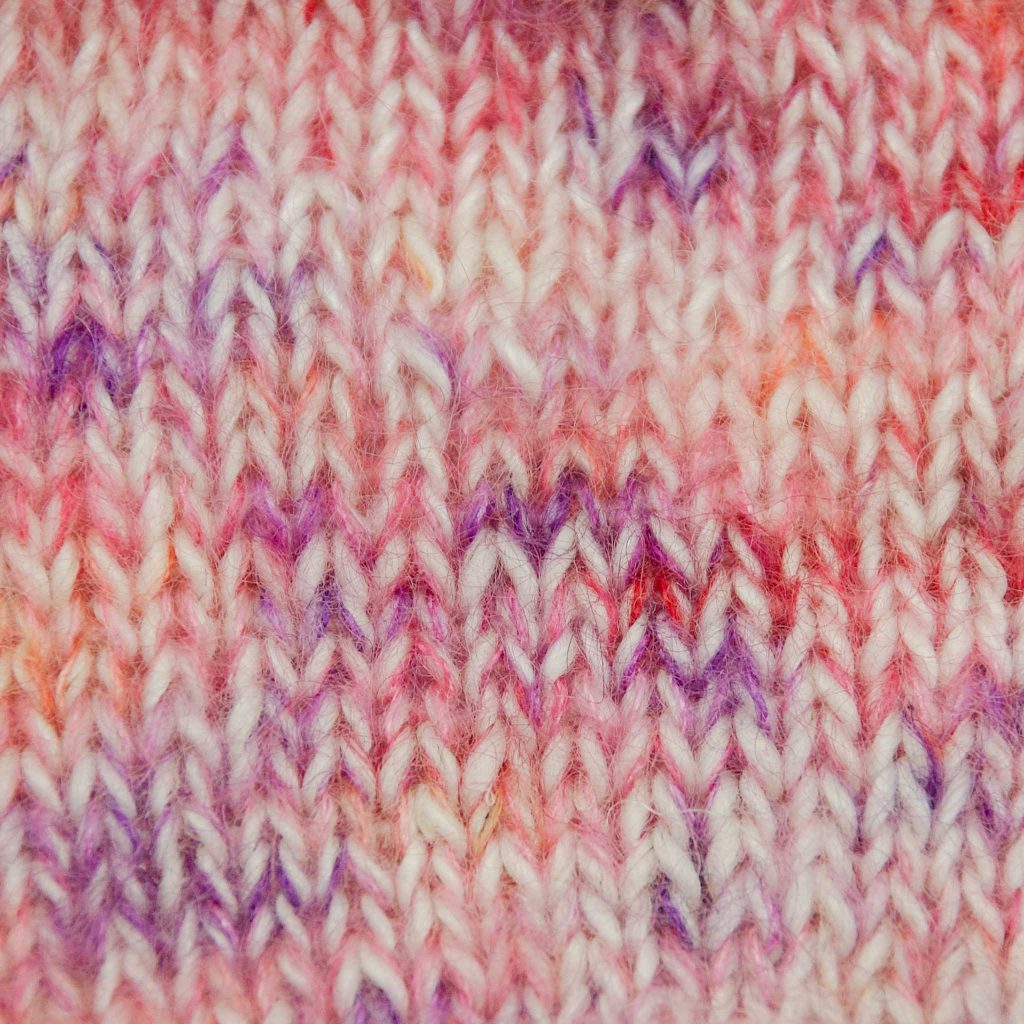
This swatch began with a strand of Merino Linen in Natural. It’s hard to believe, but all the colour comes from a single strand of Kidsilk in R.E.S.P.E.C.T.. This combo is high contrast, so you end up with a speckled effect with flecks of white background against the variegated colour.


We used this combination for our Rosie Sweater. For the purple colourwork sections, we replaced the Natural with a strand of African Violet. Notice how on the flower motif you really don’t see the R.E.S.P.E.C.T. Kidsilk because the African Violet dominates.
Solid Kidsilk with a Multicolour Merino
The multicolour doesn’t have to be the added extra. If you are starting with a multicolour yarn, like our Merino DK, you can use a Solid colour Kidsilk to soften the intensity of the variegated base.
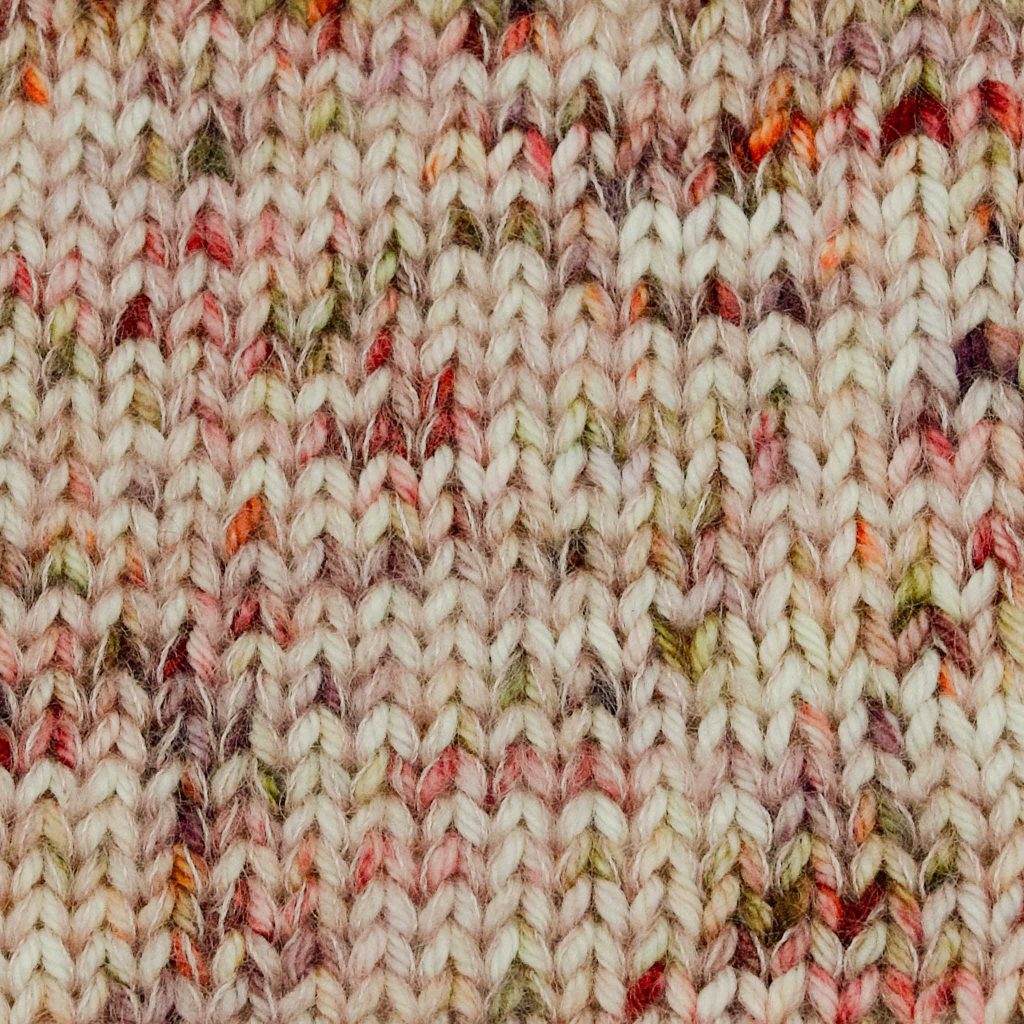
This swatch started with Merino DK in Bette Midler as its base. Adding a strand of Kidsilk in Faded Rose softens the colour effect and the two blend together really well.
Where to Now?
Hopefully we’ve inspired you and you’re feeling ready to cast on.
We’ve got lots of lovely project ideas to help you get started.
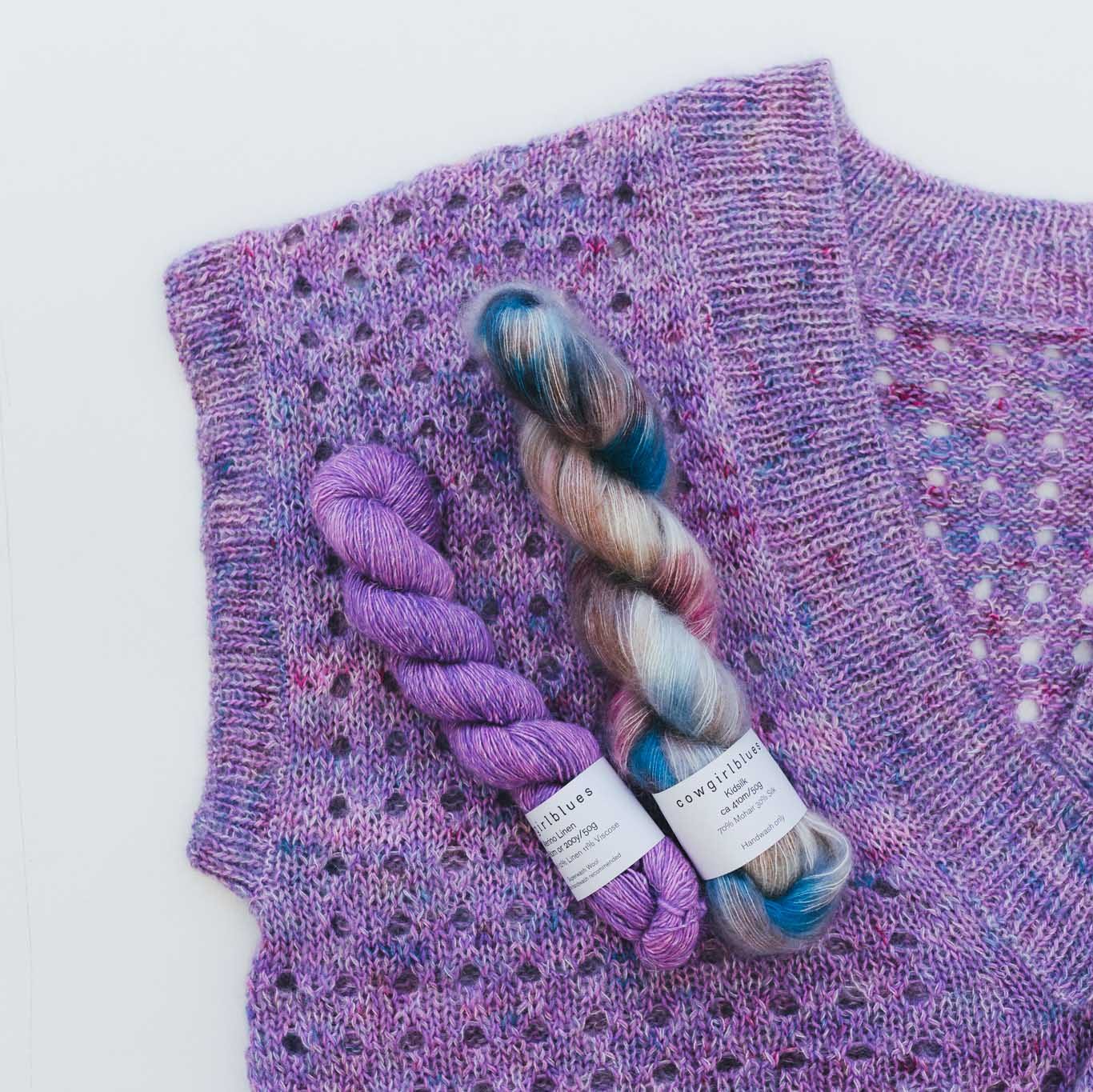
Ranunculus
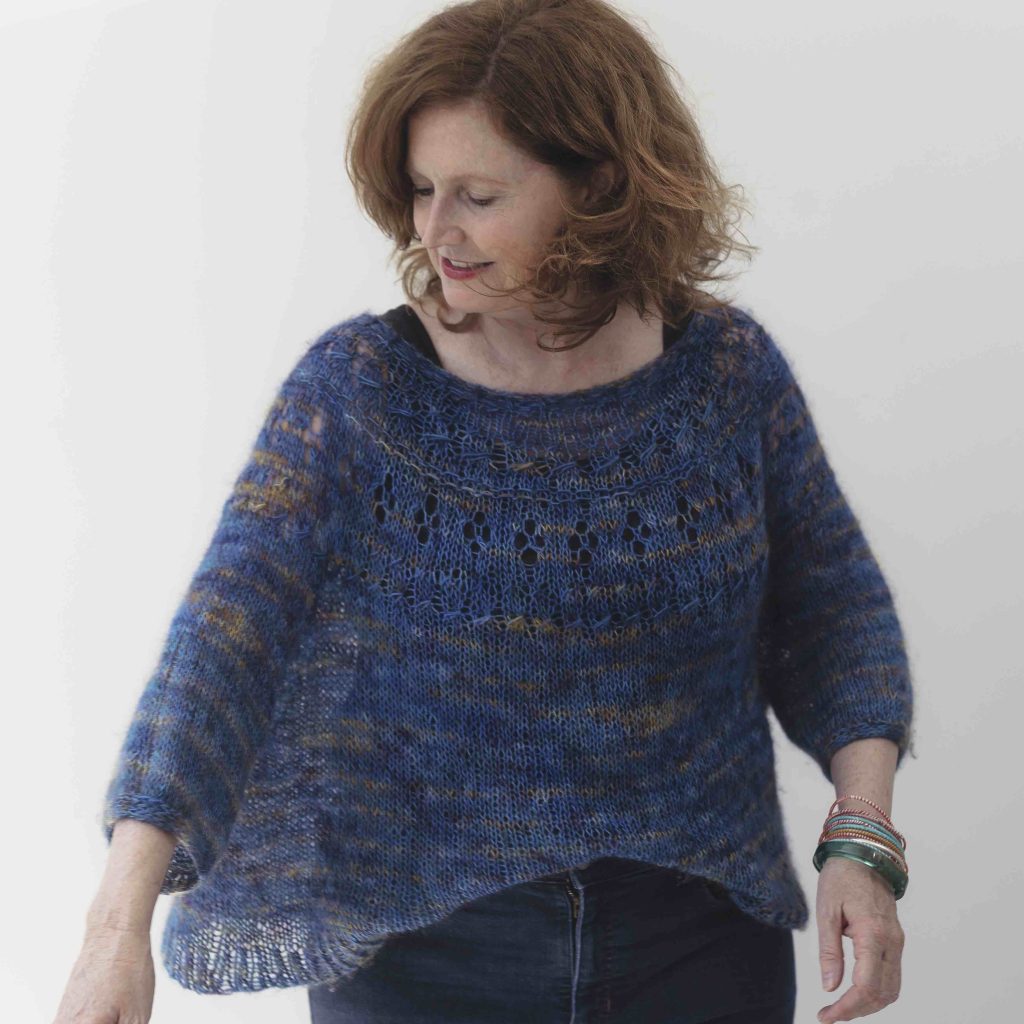
Pattern: Ranunculus
Solid: Cobalt Merino Lace
Multi: Tina Turner Kidsilk
Buy the project bundle. Select your size and colours, and we’ll send you the yarn needed to make your own Ranunculus.
Happy Marling!