
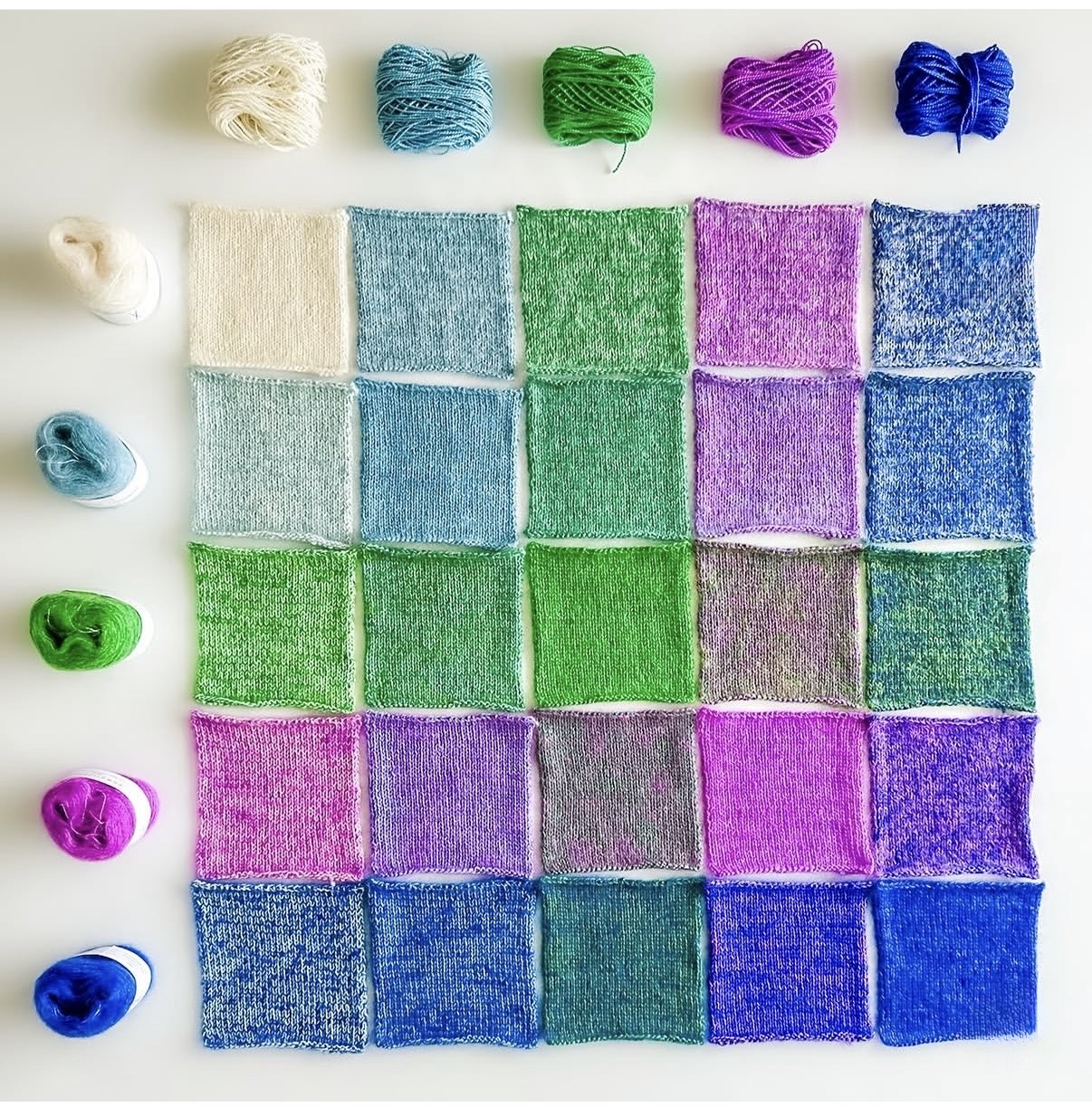
This blog post explains the concept of yarn dominance in marling. Marling is when you work with two yarns held together, as if they were one strand. It’s a really useful technique that can give your projects incredible colour variation.
If you aren’t familiar with it read our beginners guide to marling before going ahead.
Yarn Dominance in Marling
When you mix together two yarn bases (like Kidsilk and Merino Twist) that are different colours and thicknesses, one yarn will often appear more dominant than the other.
Here’s an example to help you visualise:
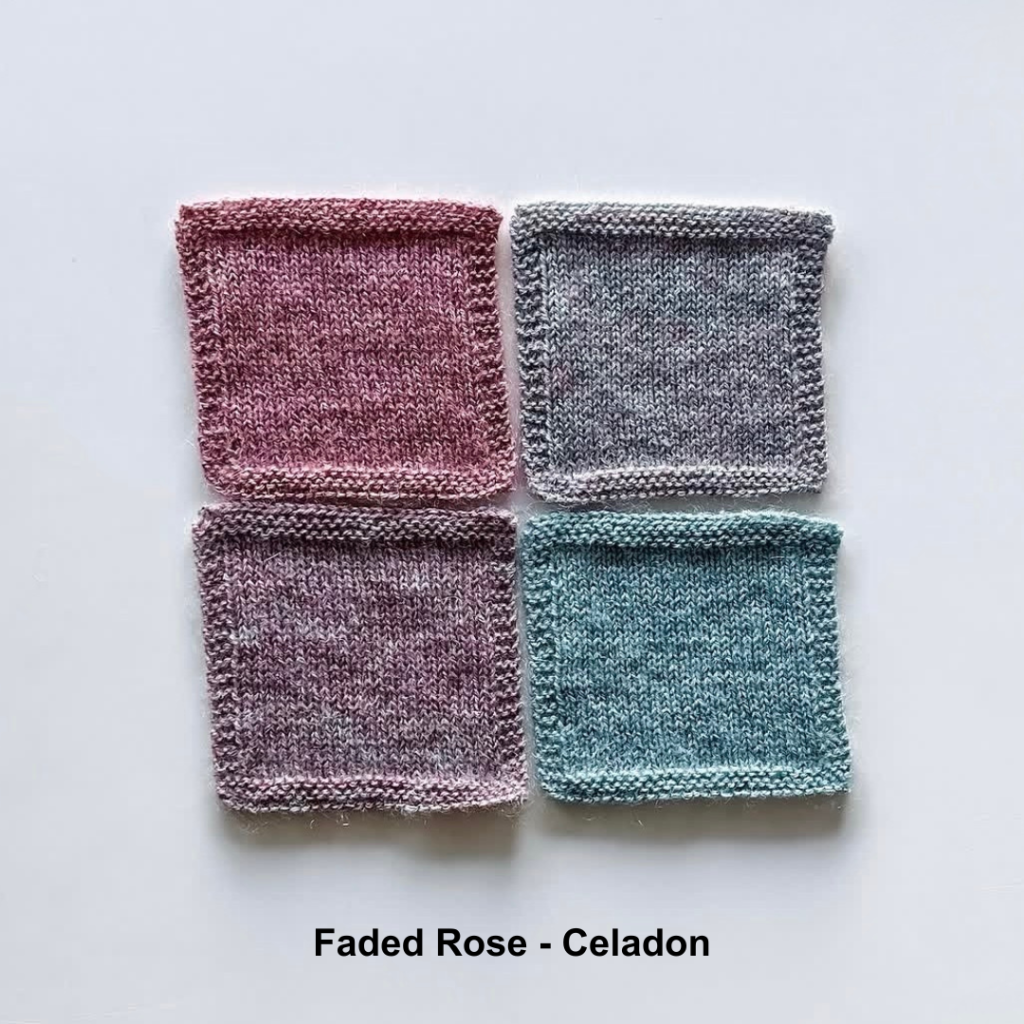
These four swatches are made from different combinations of Faded Rose and Celadon, using our Kidsilk and Merino Twist yarn bases. The top left swatch is made using two strands of Faded Rose. Adding the Kidsilk gives the swatch texture and fuzz, but doesn’t change the colour. The same goes for the bottom right, which is two strands of Celadon.
The fun comes in when we combine Faded Rose and Celadon together.
If you look closely, you’ll notice that the bottom left swatch appears more pink, while the top right swatch has a more blue tone.
Both swatches have a mauve/purple colour, the effect of mixing pink (a shade of red) and blue. But the tones are a bit different.
The pinker swatch is knit with Merino Twist in Faded Rose, and Kidsilk in Celadon. The Celadon Kidsilk adds a blue overlay, but the thicker pink Merino Twist still shines through.
The top right swatch is the inverse, and the blue dominates.
Faded Rose and Celadon are quite different colours, so the marling technique shows up very clearly. But you should know that marling doesn’t have to be with highly contrasting yarns.
Take this Baktus Scarf for example. It uses our Hot Pink and Carrot Juice.
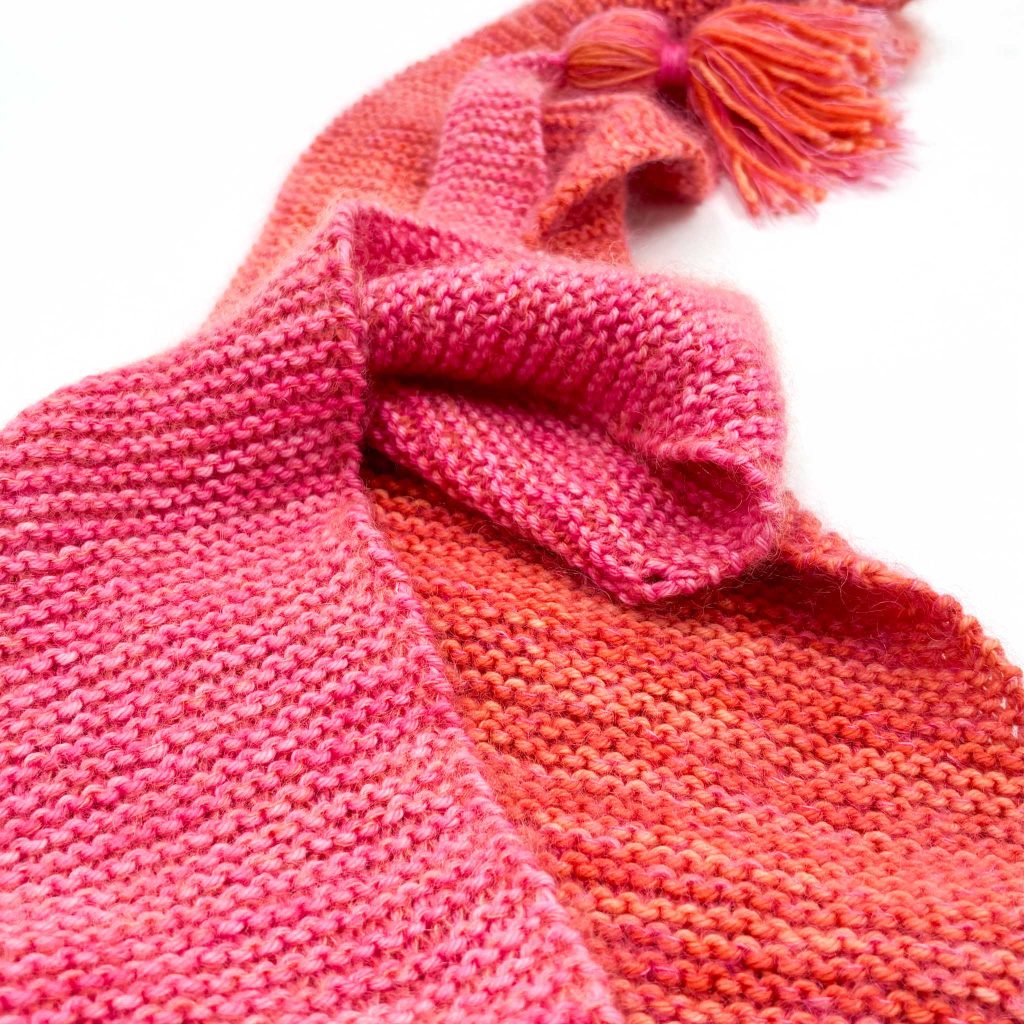
You start at one end with Kidsilk Hot Pink and Merino DK Carrot Juice, and then swap over halfway.
The Merino DK is thicker than the Merino Twist used in our swatches, so the DK colour dominates.
What this means for you
Marling is a great way to use up your stash. If you don’t like how a colour looks by itself, try pairing it with other yarns in different colours to give yourself more options.
Which yarn will dominate depends on two things:
- The thickness of each yarn. The colour of the thicker yarn will appear stronger.
- The colours of the yarns. Colours that are more saturated or darker tend to dominate.
Where to start with marling
If you want to start marling yourself the easiest place to start is by combining lighter and darker shades of the same or similar colours e.g. blues.
Here you can see Seagrass and Cobalt knit together.
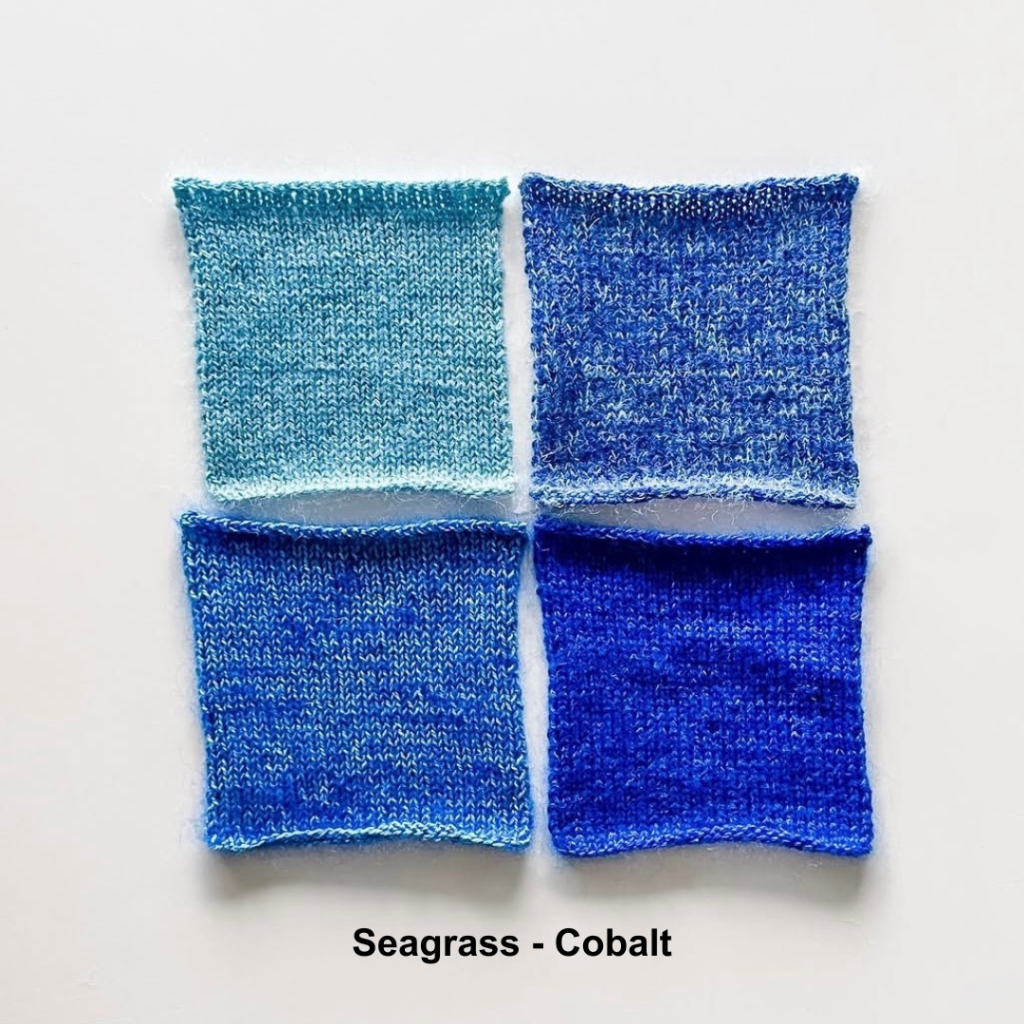
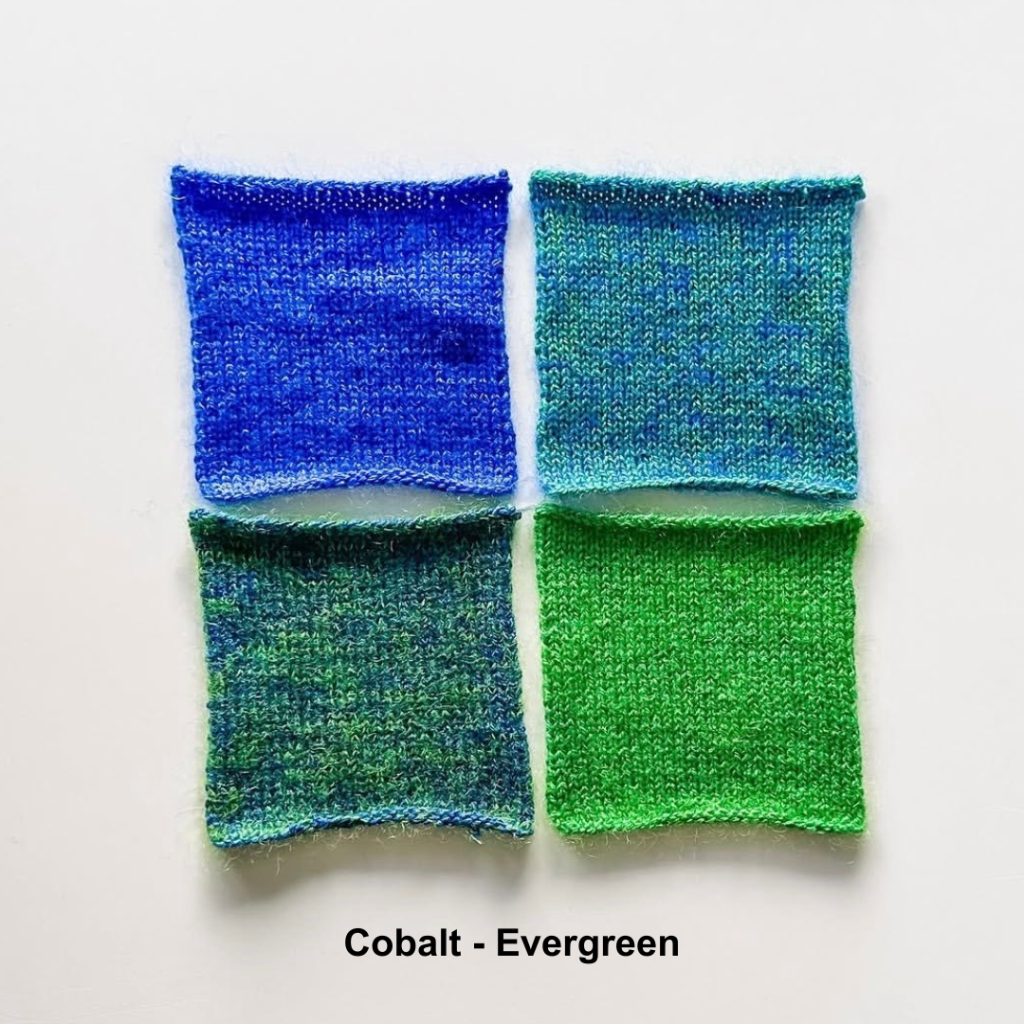
For something harmonious, stay within the same temperature family. Pair warm colours with warm colours, or cool colours with cool colours. This will give you a cohesive swatch that blends together easily. Take a blue and a green like in this example, worked with Cobalt and Evergreen.
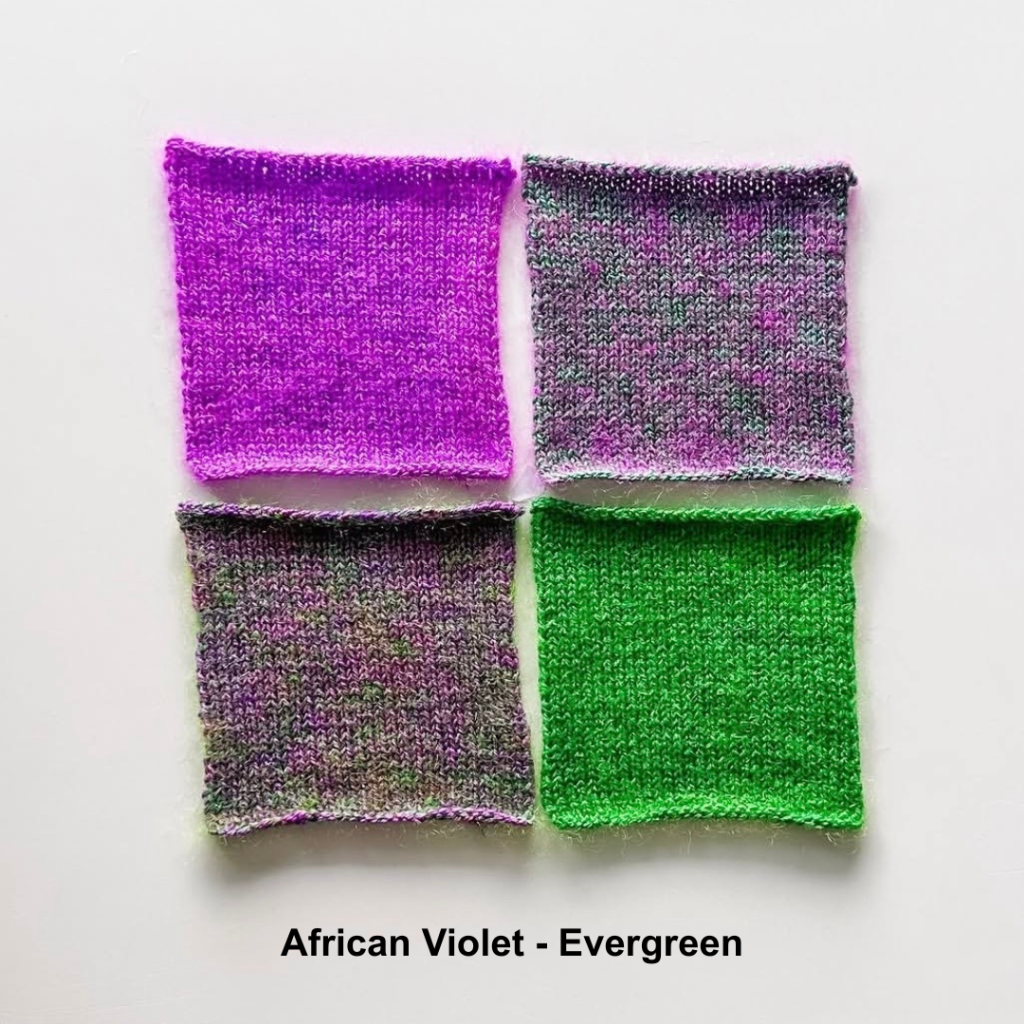
For something more playful, cross the temperature line. Pair a warm toned yarn like African Violet with a cool toned yarn like Evergreen for something more experimental.
If you want some more inspiration, head over to @olala.knitworks. Bianca took 5 different Cowgirlblues shades, and marled them together into the 25 unique swatches you’ve seen in this blog.
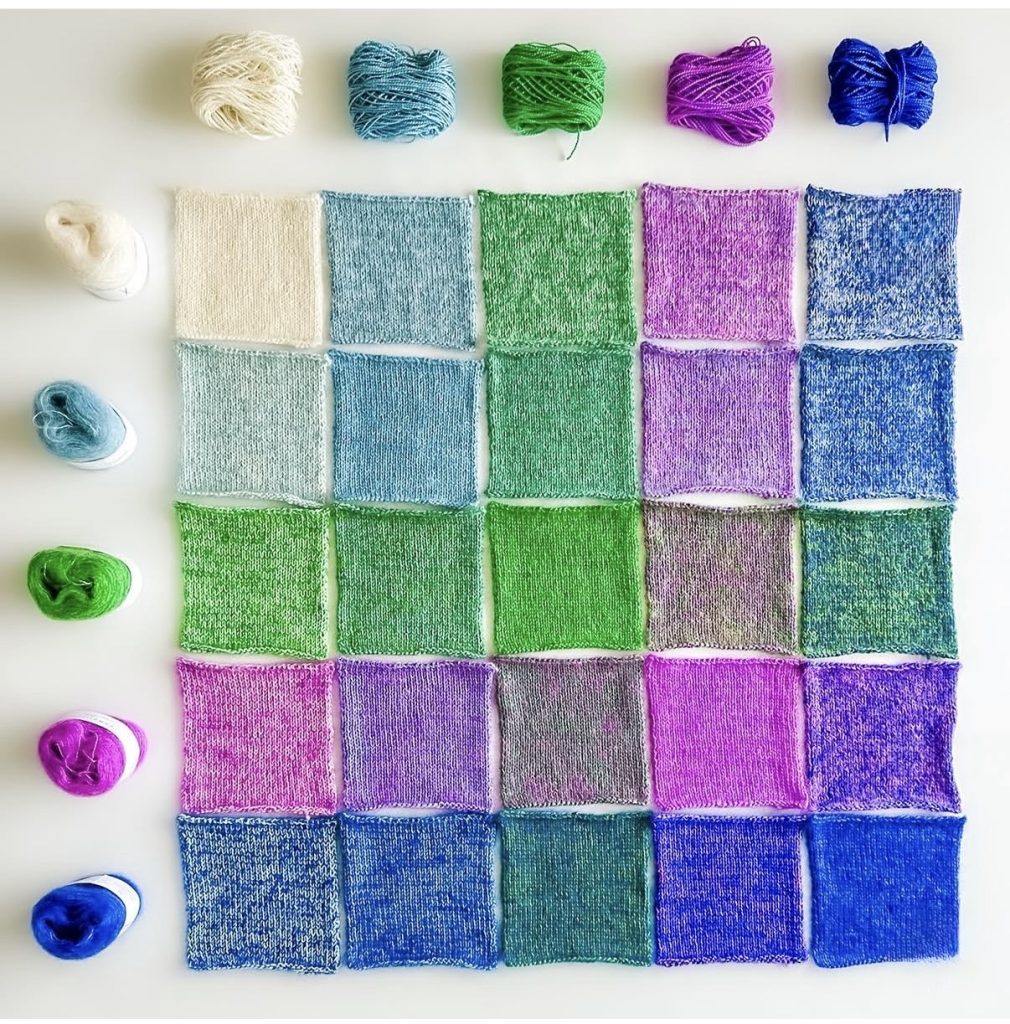
The bright colours of her winter matrix are great inspiration for the colour-confident Cowgirlblues fans. If you want to make your own, you can find colours Natural, Seagrass, Evergreen, African Violet, and Cobalt on our website.